

Live Different
Inside Citra Building Technology: An Innovative Construction Solution
Live Different
Inside Citra Building Technology: An Innovative Construction Solution
Building System Components
Citra Building Technology is composed of engineered components, each designed for a defined function within the building envelope. The sections below describe how these components work together and how they support the system’s overall performance.
EPS Core
Expanded Polystyrene (EPS) forms the core of Citra’s composite system. It’s a globally trusted insulation material known for its excellent ecological profile, stable thermal performance, and ability to be cut into virtually any shape. Lightweight and highly adaptable, EPS allows the system to achieve both design flexibility and precise thermal control—and it can be fully recycled at end of life.
To meet different climate zones and structural requirements, EPS thickness and density are adjusted—typically between 15 kg/m³ and 30 kg/m³—or replaced with graphite polystyrene (GPS), such as BASF Neopor, for enhanced thermal performance. This tunability ensures each building achieves the right balance of insulation, strength, and efficiency.
Mineral Webs
Mineral webs are inserted between the EPS sheets at engineer-prescribed intervals of 300–600 mm. Each web contains embedded glass‑fibre mesh, which provides high flexural strength and stiffness. Together, these webs lock the EPS into a stable framework, ensuring the structure remains secure during assembly and throughout the building’s lifespan.
The mineral webs also serve a second critical function: they form a mechanical connection between the EPS core and the structural plaster applied on both sides. By anchoring the plaster into the core, the webs allow the entire wall or roof to act as a single, high‑strength composite system with exceptional rigidity.
High-Performance Structural Plaster
Once the EPS–mineral web framework is in place, the surface is coated with a specialised high‑performance cementitious plaster reinforced with high‑strength glass‑fibre mesh. Plaster thickness is tailored to the structural requirements of each project, typically averaging 25 mm. When fully cured, the plaster achieves compressive strengths in excess of 50 MPa and forms the structural exterior of the EPS–mineral web framework.
Steel Reinforcement Mesh
In roofs and slabs, high‑strength, high‑ductility steel mesh is embedded within the structural plaster layer. This reinforcement follows established reinforced‑concrete design principles, providing the additional strength and ductility required for these load‑bearing elements.
Waterproofing Membrane
A waterproof, reflective membrane is applied to the roof to protect the system from weather and reduce heat gain. Materials with a high Solar Reflectance Index (SRI) are used to keep surface temperatures low, helping maintain the plaster layer below 80 °C even under intense sunlight.
Production Technology
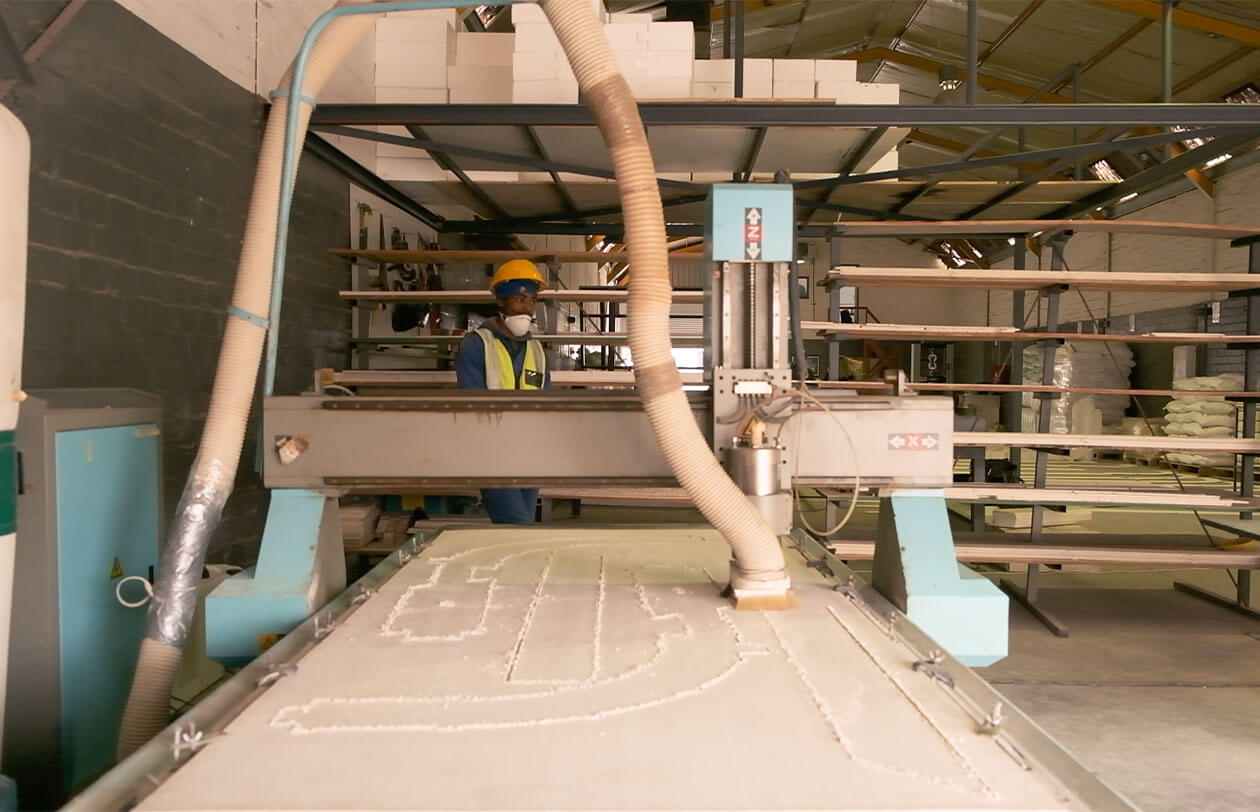
Citra’s production process combines digitally optimised manufacturing with custom‑engineered components to ensure accuracy, efficiency, and minimal waste. EPS suppliers cut sheets from blocks using CNC hot‑wire machines guided by advanced design and nesting software, and Citra casts mineral webs directly onto these sheets using its own moulds. The resulting elements are assembled into factory‑built panels—typically 1.8 × 2.5 m—that incorporate vapour barriers, rebars, and pre‑installed services as required.
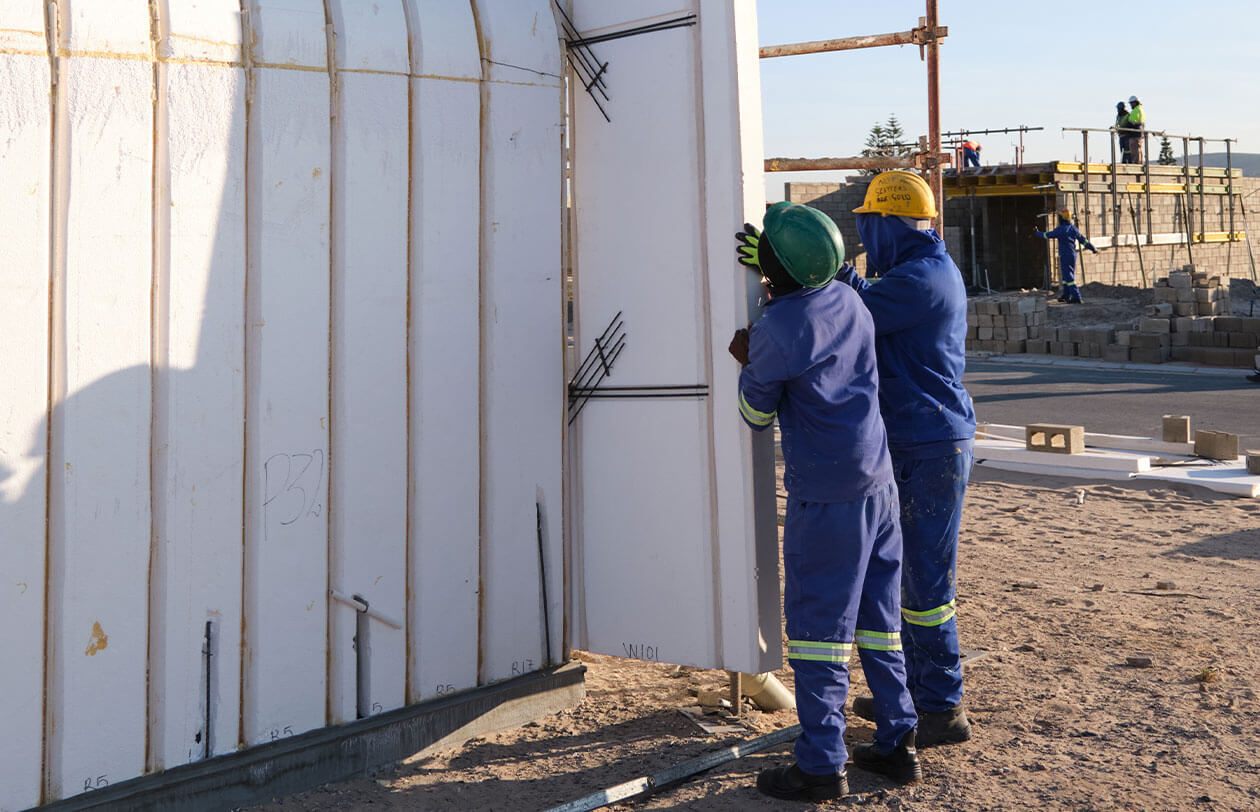
Once delivered to site, the panels are erected, services are installed, depth gauges and corner beads are fixed in place, and roof and slab reinforcement bars are positioned. The structural plaster layer is then sprayed and finished, completing the composite system and preparing the roof for its final protective treatments.
Digital Infrastructure
Citra’s digital infrastructure supports every stage of the organisation’s workflow—from design and engineering to production, sales, administration, and on‑site construction. A central data warehouse consolidates information across these systems, enabling coordinated decision‑making and continuous optimisation.
While all major functions are already digitally supported, Citra is expanding the depth of integration across its platforms to further increase speed, efficiency, and operational clarity.
Technology Roadmap
Citra is advancing its technology on several fronts. A key focus is the introduction of plaster robots and the development of mobile EPS factories, which will form part of future mobile Citra Factories. Although the mobile EPS facility poses fewer technical challenges than the plaster robots, its economic viability depends on achieving a minimum annual production volume.
Alongside these major initiatives, Citra is progressing a range of smaller projects, including increased use of prefabricated interior components, rapid‑set foundation concepts, integrated photovoltaic systems, and other energy‑related improvements. Practical on‑site workflows are also being refined.
Alongside these major initiatives, Citra is progressing a range of smaller projects, including increased use of prefabricated interior components, rapid foundation concepts, integrated photovoltaic systems, and other energy‑related improvements. Practical on‑site workflows are also being refined.
Alongside these major initiatives, Citra is progressing a range of smaller projects, including increased use of prefabricated interior components, rapid‑set foundation concepts, integrated photovoltaic systems, and other energy‑related improvements. Practical on‑site workflows are also being refined.
These developments are supported by Citra’s commitment to continuous improvement (Kaizen) and dedicated in‑house R&D, ensuring that innovation remains embedded in everyday practice. Across all of these efforts, the objective remains consistent: delivering construction that is better, cheaper, and faster.
Get in Touch
Partners